

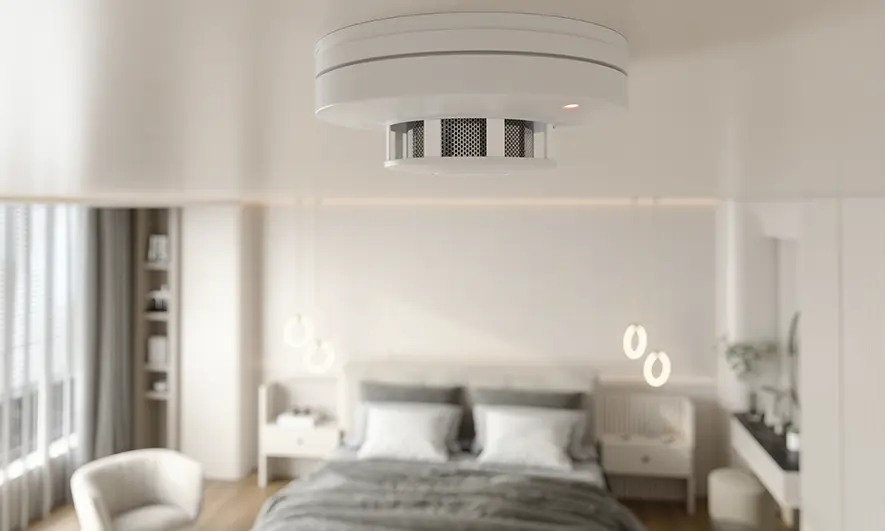

Have you tested your home’s smoke detectors recently to make sure they’re working properly? If not, you could be putting everyone in your home at risk.
When it comes to placing your smoke detectors and maintaining them, there’s no room for guesswork. In this article, you’ll learn where to install smoke detectors throughout your home, how to test them and when to replace them. Following these steps can ensure your fire safety devices keep you and your family alerted if there is a fire.
Key Takeaways
- Installing smoke detectors can reduce your risk of dying in a home fire by 60%.
- Place smoke detectors inside and outside of every bedroom and on every level of your home.
- Replace smoke detectors at least every 10 years and test them often.
Types of Smoke Detectors
Smoke detectors, also known as smoke alarms, emit a loud continuous alarm when activated by smoke. All smoke detectors perform the smoke alert function. However, each type of smoke alarm works differently. Here are some of the options to choose from:
| Type of Smoke Detector | Description |
| Ionization | Ionization smoke detectors ionize air molecules with positive and negative ions to create an electrical current. Smoke particles neutralize the ionized molecules, setting off the alarm. |
| Photoelectric | Photoelectric smoke detectors use an LED light beam and light photosensor to detect smoke or steam particles that scatter the light beam. |
| Dual Sensor | Dual sensor alarms combine photoelectric and ionization technologies. |
| Interconnected | In an interconnected smoke detector system, when one smoke detector goes off, all interconnected smoke alarms also sound the alarm. These systems can be hardwired or wireless. |
| Smart Smoke Detectors | This newer smoke detector technology can send a phone or app notification when an alarm goes off, turn on lights or shut down the HVAC system to prevent fire damage. Smart smoke detectors may also link to Nest, Ring, Alexa or other home automation systems and send notifications when the alarm battery is low. |
| Multicriteria or Intelligent | These may combine ionization, photoelectric and heat sensors to detect a home fire and are less likely to produce false alarms. |
| Voice Notification | Voice notification alarms emit a loud alarm sound but also use voice notification. |
Where To Place Smoke Detectors
Ceiling smoke detectors are ideal, or you can install them on the wall between 4 to 12 inches from the ceiling. Make sure to install smoke detectors in the following locations:
1
Inside every bedroom
2
Outside bedroom entryways
3
In every hallway
4
Basement
5
In the living room, office and other rooms
Avoid placing a smoke alarm in the kitchen, where smoke and steam from cooking or boiling water can set off the alarm. Also avoid installing them in the bathroom as steam from a hot shower can trigger the alarm.
To avoid false alarms, place smoke detectors at least 20 feet from:
- Furnaces
- Space heaters
- Clothes dryers/laundry rooms (dryer lint can make alarms less effective)
- Water heaters
Place smoke detectors at least 10 feet from humidity sources, including:
- Showers and baths
- Humidifiers
- Laundry rooms
- Vaporizers and diffusers
- Utility rooms
- Saunas
- Dishwashers
Tip: To detect potentially deadly carbon monoxide, install a carbon monoxide detector or combined smoke/carbon monoxide detector on every level of the home and in each bedroom. Don’t install a smoke detector in the garage where temperatures fluctuate and can render the smoke detector less effective.
Smoke Detectors for Deaf or Hard-of-Hearing People
If you or others living in the home are hard of hearing or deaf, install smoke detectors specially designed for deaf or hard-of-hearing people. These type of smoke alarms flash strobe lights when the alarm goes off. You can also consider pillow or bed shaker devices that shake to awaken you when smoke detectors go off.
How Often Should I Replace My Smoke Detector?
Replace any smoke detector that’s 10 years old or doesn’t pass the alarm test, which is typically found on the back of the alarm. (Combination smoke/carbon monoxide detectors should be replaced every 7 to 10 years.) Go by the manufacture date, not the date purchased. Follow the manufacturer’s testing, cleaning and maintenance instructions included with the smoke detector. The NFPA recommends testing smoke detectors at least once a month.

Perform a Smoke Detector Safety Check
Now that you know where to place and how to maintain smoke detectors, test all smoke detectors in your home, noting how many years since the manufacture date listed on the back of the alarm. Replace any smoke detectors that are more than 7 to 10 years old with a reputable brand. And be sure the replacement displays a UL 217 code or another code showing the detector was tested by a nationally recognized testing laboratory.
Tip: Find additional tips on how to choose a reliable smoke detector from the National Fire Protection Association in this brief video tutorial.
Frequently Asked Questions About Smoke Detectors
Can Steam Set Off a Smoke Detector?
Yes. Steam from a hot shower or pot on the stove can set off a smoke alarm.
Why Did My Smoke Alarm Randomly Go Off in the Middle of the Night?
A temperature drop in your home can trigger the alarm. So can dust buildup, high humidity and bugs. If your smoke detector is chirping off and on, change the battery and test to see if the smoke alarm needs to be replaced.
Why Is My Smoke Detector Beeping?
When your smoke detector chirps once or twice every minute, replace the battery with a new one. If the smoke detector keeps chirping after the new battery, replace the device.
How Do I Turn Off a Smoke Detector?
Before turning off any smoke detector, check first to make sure there isn’t a fire. You can generally turn off a battery-powered smoke detector by pressing the silence or reset button, according to the manufacturer’s instructions, until the alarm sound stops.
How Do I Change a Smoke Detector Battery?
Smoke detectors typically twist open for battery replacement. Consult the user’s manual or back of the smoke detector for battery instructions.