

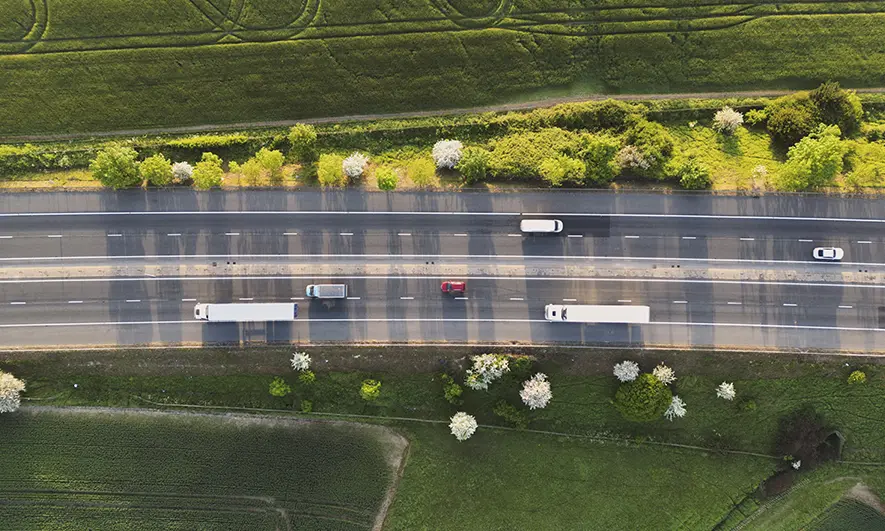

When you’re driving behind a large commercial semi-truck, passing the big rig as soon as possible may be your first instinct. However, if you enter the “no zone” — the blind spots where your vehicle disappears from the truck driver’s view — your chances of a crash or collision with a large truck increase.
In 2022, 73% of fatal crashes and 77% of non-fatal crashes involving large trucks transporting cargo were caused by a collision with another vehicle, according to the Federal Motor Carrier Safety Administration (FMCSA).
Passing a large truck or getting too close to one can increase the risk of a crash. Before you get behind the wheel, cruise through these six tips on steering clear of the no zone when sharing the road with large trucks.
Key Takeaways
- The “no zone” for large trucks includes four areas of blind spots around the vehicle.
- Driving in the “no zone” can lead to crashes that cause injury or death.
- When passing in the “no zone”, signal and accelerate to get clear of the blind spot.
What Is the No Zone?
The “no zone” is an area of large blind spots around the sides, front and rear of a commercial truck. When you drive in this area, the semi driver can’t see your vehicle on its large side mirrors. Truck drivers must rely solely on side mirrors to see other vehicles. If you’re in the “no zone”, your car won’t appear in the mirror, which makes your vehicle invisible to the driver.
Keep in mind these areas when driving in close proximity to large trucks:
- Front: Extends 20 feet ahead of the truck
- Left side: Starts behind the driver’s door and extends to the back of the truck
- Right side: Starts at the truck cab and extends to the back, and may include one or two lanes to the right
- Rear: Extends 200 feet behind the truck
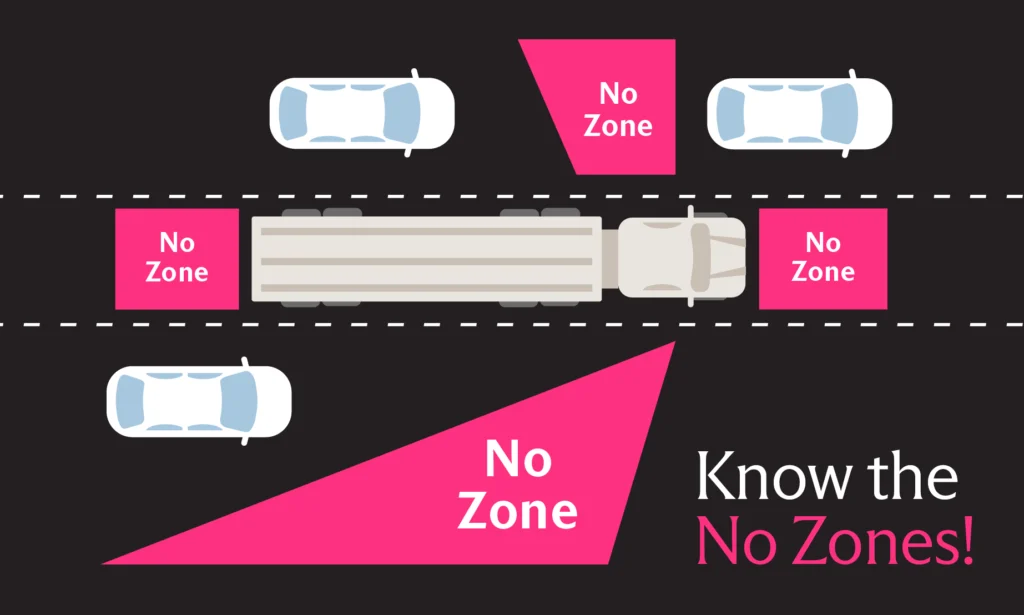
For a visual overview of the no zone areas, view this video from the Utah Department of Transportation.
Where and When Do Large Truck Crashes Occur?
Large truck collisions are most likely to occur at certain locations and days of the week, according to FMCSA data:
- The majority (82%) of fatal and nonfatal (88%) large truck crashes occurred Monday through Friday.
- 39% of fatal large truck crashes and 24% of injury crashes happened overnight between 6 p.m. and 6 a.m.
- 54% of large truck fatal crashes happened in rural areas.
- 24% of large truck fatal crashes occurred on interstate highways.
- 63% of fatal crashes occurred when another vehicle, person, object or animal was inside or entering the truck’s lane.
- The majority of fatalities in large-truck accidents were people who were not occupants of the semi.
- Trucks with one semitrailer were involved in 54% of large truck fatal crashes. Trucks pulling two semitrailers made up 2% of fatal crashes.
6 Tips for Driving Safely By Big Trucks
When sharing the road with semitrucks, these defensive driving tips can help keep you, your passengers and the truck’s driver safe.
1
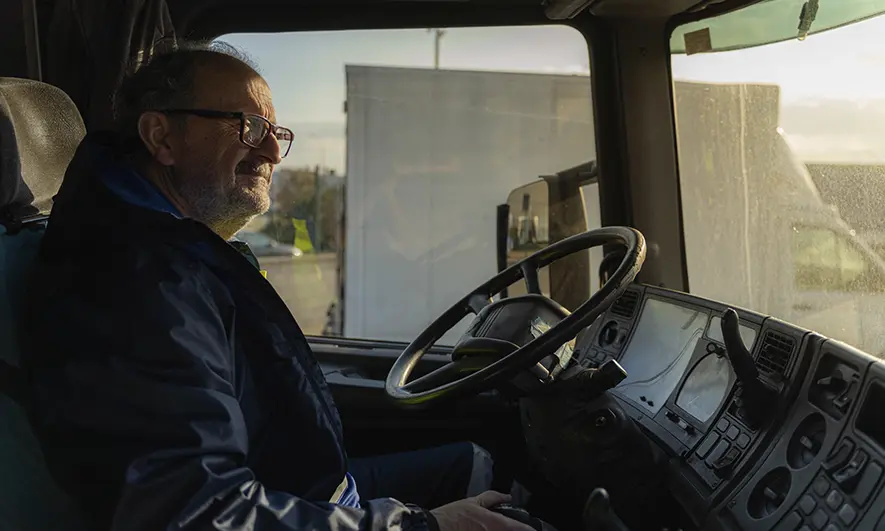
Look for the driver’s face in the mirror before trying to pass a large truck. If you can’t see the driver’s face, they can’t see your vehicle.
2
When passing a large truck on the left, be sure to signal, then move into the left lane and accelerate to pass the truck quickly.
3
Never cut off or pull quickly in front of a semitruck because you’re more likely to be in the driver’s blind spot.
4
Never tailgate a large truck as your car will be in the “no zone” and you will be invisible to the driver. If the semitruck stops suddenly, your car could slide under the back of the truck. Driving too close can also expose you to strong wind turbulence from the big rig that could push your vehicle into another lane.
5
When a large truck begins to pass you or merge from a ramp, stay to the right and slow down to allow the driver room to safely merge in front of your vehicle.
6
Anticipate wide turns. When a large truck turns, it must swing far to the left or right into another lane, causing a crash if you’re not paying close attention.
7
Also follow these tips when driving alongside large buses, which have the same “no zones” as large trucks.
Respect the No Zone To Stay Safe
When you steer clear of the “no zone” around semi-trucks, buses and similar large vehicles, you make driving safer for yourself, the truck driver and any drivers near you on the road. Knowing about these blind spots and following the safety tips above can help avoid accidents.

My dad was a truck driver and taught me this information long ago. It was a great reminder! Thank you❣️
Yes
Thanks for sharing.