

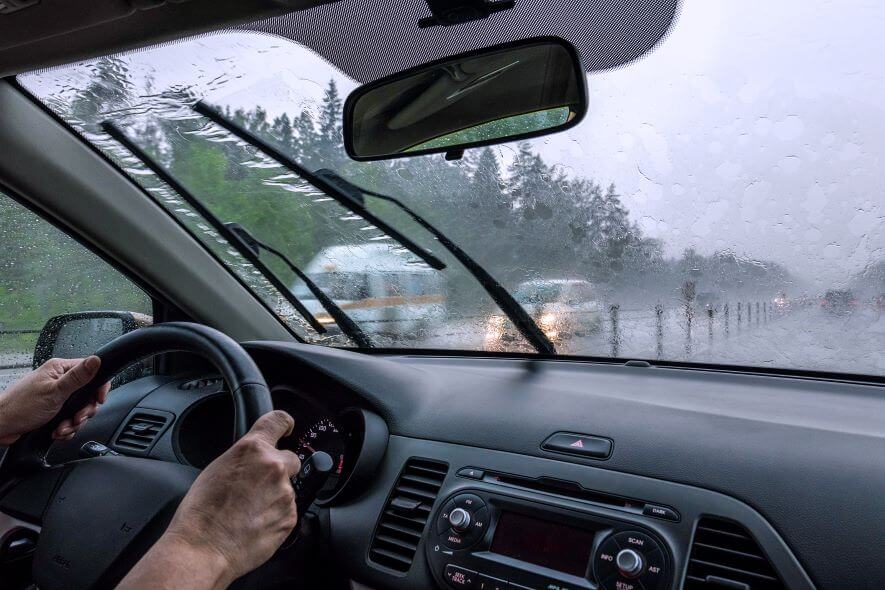

Imagine cruising down the highway in the rain when your car suddenly begins to glide atop a thin film of standing water. Your vehicle goes into a tailspin—out of your lane or off the road. Hitting the brakes won’t slow the car, and steering won’t regain control of the vehicle because your tires no longer connect with the pavement. When that happens, the car is hydroplaning whichcan cause spinouts, collisions and other serious accidents.
Even if you avoid hydroplaning, wet weather is always a time to be extra cautious behind the wheel: 73% of car crashes in adverse weather conditions happen during rain or mist, according to the Federal Highway Administration.
Hydroplaning on wet pavement can catch you off-guard and potentially put you, your passengers and other drivers in danger. Below you’ll learn what causes hydroplaning, how to lower your risks and what to do if your car is hydroplaning.
Key Takeaways
- Hydroplaning on wet pavement can cause spinouts and accidents.
- Hitting the brakes or jerking the steering wheel can worsen hydroplaning.
- Safe driving habits and replacing worn tires are key to avoiding hydroplaning.
What Is Hydroplaning?
Hydroplaning, also known as aquaplaning, occurs when a vehicle’s rotating tires aren’t able to scatter excess water from tire treads creating a layer of water, sometimes mixed with oils from the road, beneath and in front of the tires.
Tire manufacturers design rubber tire tread patterns to release excess water and help tires get good traction on wet pavement or during rain. But driving fast on wet pavement, such as on the freeway, causes tires to rotate more rapidly. This may not allow enough time to rid excess water from tire treads, and it can render the built-in tread protections less effective, especially if tires are worn.
But high speeds aren’t always to blame for hydroplaning.
A vehicle can hydroplane at speeds as low 35 mph. Lightweight vehicles also have a higher risk of hydroplaning than heavier vehicles due to less weight pressing down on the tires.
What To Do When Hydroplaning
You may be able to stop hydroplaning by paying close attention to warning signs from your car. For example, if your vehicle is beginning to hydroplane, steering has a lighter feel or no response. The vehicle feels like it’s floating or sliding, similar to an ice skid.
Your first instinct may be to slam on the brakes or jerk your steering wheel to correct the situation. However, panicking only makes hydroplaning worse.
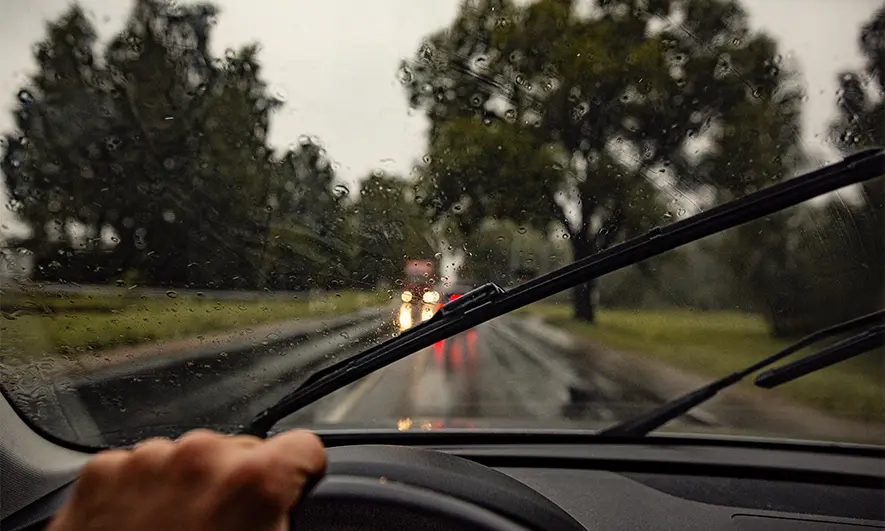
Stay calm and try to stop the vehicle’s hydroplaning with these tips:
- Don’t hit the brakes. Slamming on the brakes could cause the vehicle to skid into another lane or a tailspin.
- Ease acceleration. Stepping on the gas to try to get out of a hydroplaning situation can have the opposite effect by reducing traction. Instead, slow the car by lifting your foot off the accelerator to reduce speed.
- Don’t jerk the steering wheel. Instead, gently steer into the direction of the skid to help regain traction and then straighten the wheel.
11 Steps to Reduce Hydroplaning Risk
Hydroplaning can be a scary situation. Taking the steps below while driving in rain or on wet pavement can reduce hydroplaning risk.
- Slow down on wet pavement or when driving through standing water.
- Avoid hitting the brakes suddenly.
- Keep tires inflated to proper PSI levels, which are listed on the side of the tire. When tires are underinflated, contact with the pavement in wet conditions can be uneven. This can reduce traction and increasing hydroplaning risk.
- Rotate tires regularly and replace worn tires. Replace before or when the tire tread gets down to 2/32 of an inch.
Tip: You can measure tire tread depth with the “penny test” where you insert a penny with Lincoln’s head pointed down in the tread. If you can see Lincoln’s head entirely, the tread is worn and the tire needs to be replaced. You can also inspect “wear bars,” which are markings on the tire that indicate tread depth.
- Drive in center lanes on roadways with multiple lanes. Water is more likely to pool on outer lanes.
- Avoid driving through large puddles and pools of standing water.
- Try to drive in the tire tracks of the driver in front of your, since some water has already been cleared from those tracks.
- Make sure your headlights are on so you can gauge the depth of puddles and larger pools of water.
- Turn off cruise control. Without cruise control, you’re likely to slow down more frequently on wet pavement and reduce high speeds that can lead to hydroplaning.
- Look ahead while driving to spot standing water, wet pavement and oily areas. That way, you can avoid them or slow the vehicle.
- Allow a four-second gap between you and the vehicle ahead. Count how many seconds it takes to pass a sign, light pole or another marker after the car ahead of you passes the marker. Keep a safe distance between vehicles in front of and behind your car to allow time to respond safely if hydroplaning.
Auto Insurance Prepares You Just in Case
Following these tips can lower your risk of hydroplaning and help you regain traction in a sliding situation. Still, no matter how safely you drive, accidents can happen. That’s why it’s important to make sure your car is fully insured with collision, liability, property damage and other necessary auto insurance coverage in case of a slippery ride.


Great advice, thanks for sharing. I’ve always wanted to know what to do in case my car hydroplane.
Yes, this was very helpful. Thank you so much for supplying this information.
Excellent advice. This happened to us when we were living in Northern, MI once. It was very frightening; especially because after my husband gained control of the car, the individual that we almost hit, came up to my husband’s window and we had a Road Rage incident, and this was back in the 1980’s when it wasn’t a common occurrence yet then! Very scary with a car full of boys coming back from a hockey game at nite.
If it is too wet, I don’t drive or if it is snowing.
Thanks for a very good safe driving reminder.
I know this info but it doesn’t hurt to remind yourself.
This article was very helpful
Thanks for sharing. Always a good reminder to keep fresh in our minds.
I experienced hydroplaning many years back. It was exactly like the article said, like you’re floating. It happened very quickly and definitely caught me off guard. I was in town and my speed was low, maybe 25-30mph and I just glided across the top of the water.
I bumped into the car ahead of me. Thank goodness there was no damage. Just left me with a weird feeling of how did that happen when I was driving at a slow speed.
Thought your supposed to tap brakes while in a spin? Please advise
Yes, I found this article to be very informative.
Very much so helpful
The info was enlightening. Although I am familiar with hydroplaning because I have experienced it myself on more than 1 occasion, I never really understood the cause of it. So,!thank you for that.
Thanks for sharing.
Thanks for the much needed information. I try to be a cautious driver at all times.
Don’t inflate tires on what the tires say read the recommendations on the drivers door jamb.
This item hit my email middle of May. Perhaps a better item for March in CT. I will say to that the cruise control information is very important.
Did pick up a few pointers most of it. I already knew through years of experience.
Thank you.
Good article basics rules
Yes was helpful just to review it
Although I was taught (by my father when I first started driving) about hydroplaning, tail gating, etc. It is always good to be reminded of such emergencies. The tips are also very helpful. Thank you.
It’s always good to get these little reminders and tips about how to drive in very wet weather or very snowy icy weather. Even when you’ve been driving for a long time, you may tend to forget the correct way to react in an emergency. Keep it up I think all these reminders are great for me and I think they’re great for everybody. Thank you.
Yes this article was helpful, as I know our roads have areas when it rains hard with standing water, and these tips will help me.
I’ve never encountered hydroplaning it sounds scary. It did reiterate to stay she distance behind car in front of me and turn into skid which seems instinct tells your brain to turn away from skid direction. I hope i never need to use it.
Thank you for helpful info.
Had been aware of potential situations for hydroplaning. Advice on how to react to it new and useful.
Yes, very good information. Thanks!
Thank you for the tips, I am doing more driving, alone and want to avoid slippery road vehicle issues in wet weather.
I liked this information on sliding on wet roads. It was very helpful!
Yes
Yes! Thank you. Very helpful.
I use all-terrain tires on my Denali GMC truck because they have deeper, better gripping, wet road traction.
I also use automatic 4-wheel drive to prevent wet road wheel spin or loss of control.
The explanation of the cause was helpful. The steps to correct it were spot on. I managed to survive a dangerous situation by instinct which matches your suggestions. I was in the left lane and wanted to get past a large truck with cargo trailer. As I hit 70mph, I lost the feeling of the road, like I was on ice. My car rotated clockwise, still in the left lane but now perpendicular to the road facing the double rear tires on the trailer, about a yard away. The only action I took was to rotate the steering wheel slightly to the left. After several seconds the car must have slowed down enough to regain traction and suddenly jerked in the direction I had steered, and thankfully straightened out. My guess is that pointing the tires in an appropriate direction made a big difference once the tires re-engaged with the road. Good article.
GOOD ADVICE I WISH OTHERS KNEW THIS
This was a great refresher since warmer weather with rainy weather coming on fast. Thank you for this article. It was good information and reminds me how to try to be safe and avoid accidents, even in rainy weather.
very helpful and easy to understand
Safety first.
I think people over 70 should (by law) take a drivers safety course every 3 years.
Again good information
It was helpful
Great information
Very helpful. Gave me tips I didn’t know. Thank you.
Yes, this article is very helpful.
Thank you.
Yes, very helpful any time of the year. Thanks
Last Summer I bought new tires at nearly $2k. I don’t drive my CTS Coupe in the rain if I can help it and store it in the Winter. I am astonished to see the speed at which many people drive in the rain. I’ve always say, ‘the faster you drive, the quicker things can happen.’
Also tailgating reduces reaction time and is discourteous and can lead to road rage. Slow down folks.
It refreshed my memory about all the safety issues.
That’s
Thank you very helpful indeed!