
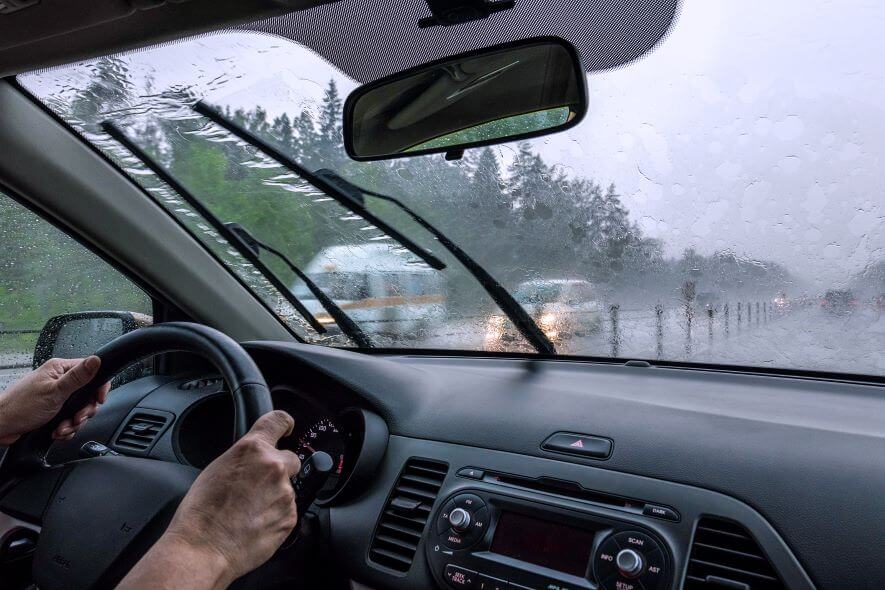

Imagine cruising down the highway in the rain when your car suddenly begins to glide atop a thin film of standing water. Your vehicle goes into a tailspin—out of your lane or off the road. Hitting the brakes won’t slow the car, and steering won’t regain control of the vehicle because your tires no longer connect with the pavement. When that happens, the car is hydroplaning whichcan cause spinouts, collisions and other serious accidents.
Even if you avoid hydroplaning, wet weather is always a time to be extra cautious behind the wheel: 73% of car crashes in adverse weather conditions happen during rain or mist, according to the Federal Highway Administration.
Hydroplaning on wet pavement can catch you off-guard and potentially put you, your passengers and other drivers in danger. Below you’ll learn what causes hydroplaning, how to lower your risks and what to do if your car is hydroplaning.
Key Takeaways
- Hydroplaning on wet pavement can cause spinouts and accidents.
- Hitting the brakes or jerking the steering wheel can worsen hydroplaning.
- Safe driving habits and replacing worn tires are key to avoiding hydroplaning.
What Is Hydroplaning?
Hydroplaning, also known as aquaplaning, occurs when a vehicle’s rotating tires aren’t able to scatter excess water from tire treads creating a layer of water, sometimes mixed with oils from the road, beneath and in front of the tires.
Tire manufacturers design rubber tire tread patterns to release excess water and help tires get good traction on wet pavement or during rain. But driving fast on wet pavement, such as on the freeway, causes tires to rotate more rapidly. This may not allow enough time to rid excess water from tire treads, and it can render the built-in tread protections less effective, especially if tires are worn.
But high speeds aren’t always to blame for hydroplaning.
A vehicle can hydroplane at speeds as low 35 mph. Lightweight vehicles also have a higher risk of hydroplaning than heavier vehicles due to less weight pressing down on the tires.
What To Do When Hydroplaning
You may be able to stop hydroplaning by paying close attention to warning signs from your car. For example, if your vehicle is beginning to hydroplane, steering has a lighter feel or no response. The vehicle feels like it’s floating or sliding, similar to an ice skid.
Your first instinct may be to slam on the brakes or jerk your steering wheel to correct the situation. However, panicking only makes hydroplaning worse.
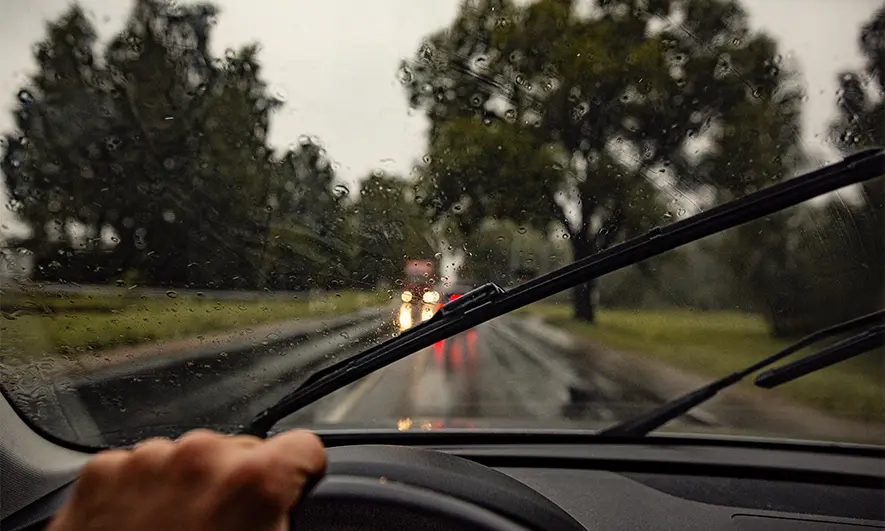
Stay calm and try to stop the vehicle’s hydroplaning with these tips:
- Don’t hit the brakes. Slamming on the brakes could cause the vehicle to skid into another lane or a tailspin.
- Ease acceleration. Stepping on the gas to try to get out of a hydroplaning situation can have the opposite effect by reducing traction. Instead, slow the car by lifting your foot off the accelerator to reduce speed.
- Don’t jerk the steering wheel. Instead, gently steer into the direction of the skid to help regain traction and then straighten the wheel.
11 Steps to Reduce Hydroplaning Risk
Hydroplaning can be a scary situation. Taking the steps below while driving in rain or on wet pavement can reduce hydroplaning risk.
- Slow down on wet pavement or when driving through standing water.
- Avoid hitting the brakes suddenly.
- Keep tires inflated to proper PSI levels, which are listed on the side of the tire. When tires are underinflated, contact with the pavement in wet conditions can be uneven. This can reduce traction and increasing hydroplaning risk.
- Rotate tires regularly and replace worn tires. Replace before or when the tire tread gets down to 2/32 of an inch.
Tip: You can measure tire tread depth with the “penny test” where you insert a penny with Lincoln’s head pointed down in the tread. If you can see Lincoln’s head entirely, the tread is worn and the tire needs to be replaced. You can also inspect “wear bars,” which are markings on the tire that indicate tread depth.
- Drive in center lanes on roadways with multiple lanes. Water is more likely to pool on outer lanes.
- Avoid driving through large puddles and pools of standing water.
- Try to drive in the tire tracks of the driver in front of your, since some water has already been cleared from those tracks.
- Make sure your headlights are on so you can gauge the depth of puddles and larger pools of water.
- Turn off cruise control. Without cruise control, you’re likely to slow down more frequently on wet pavement and reduce high speeds that can lead to hydroplaning.
- Look ahead while driving to spot standing water, wet pavement and oily areas. That way, you can avoid them or slow the vehicle.
- Allow a four-second gap between you and the vehicle ahead. Count how many seconds it takes to pass a sign, light pole or another marker after the car ahead of you passes the marker. Keep a safe distance between vehicles in front of and behind your car to allow time to respond safely if hydroplaning.
Auto Insurance Prepares You Just in Case
Following these tips can lower your risk of hydroplaning and help you regain traction in a sliding situation. Still, no matter how safely you drive, accidents can happen. That’s why it’s important to make sure your car is fully insured with collision, liability, property damage and other necessary auto insurance coverage in case of a slippery ride.