

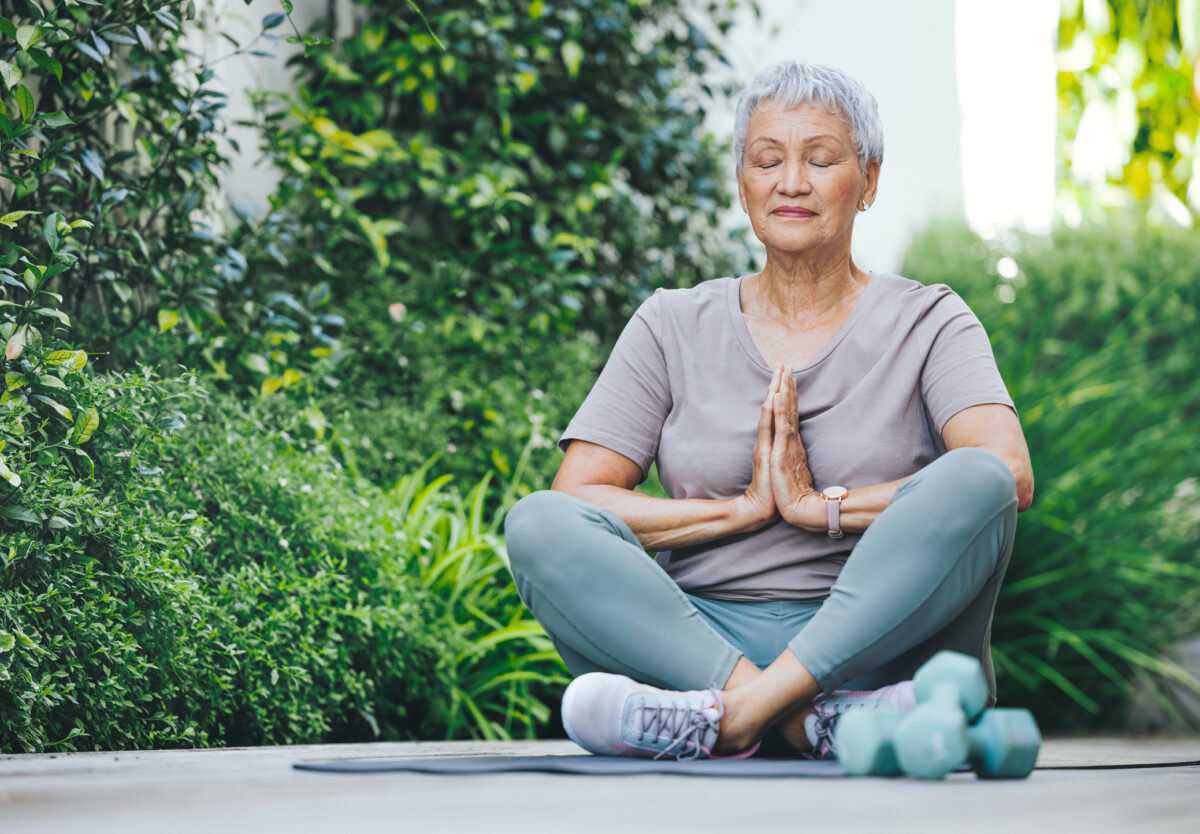

As another year comes to a close and we gear up to ring in a new one, many of us are eager to find ways to enhance our overall physical and mental wellness. By adopting self-care habits, you can tap into optimism, relaxation and a more positive outlook. In fact, practicing self-care regularly has been proven to help you manage stress, lower your risk of illness and boost energy, according to the National Institute of Mental Health.
Not sure how to start adding easy self-care habits to your daily routine? Find inspiration in these six practices.
1
Practice Gratitude
It’s easy to get caught up in the chaos of daily life. Making a habit of practicing gratitude can help train our brains to notice the positive rather than focusing on the negative aspects of life.
Feeling gratitude on a regular basis can boost immunity, reduce risk for depression and anxiety, and lead to a better night’s sleep, according to the Mayo Clinic. Taking time to be grateful may also lower the risk for disease and help ease chronic pain.
To get started on your gratitude practice, all you need is a spiral notebook and a few minutes a day. Write down five to 10 things you’re grateful for each morning. Your gratitude list might include items small or large, such as “I’m grateful that the sun is shining today,” “I’m grateful for my good health,” or “My coffee is delicious.”
You can even do this as a text that you send to a buddy, to help hold you both accountable, or as a social media post with images to tap into your creativity.
More of a night owl? You can also write your gratitude list before going to bed to put positive thoughts in your mind before you drift off to sleep.

2
Restore Body and Mind with Massage
Getting a monthly massage can be a great self-care habit to start the new year off right. Or, you can opt for daily DIYs to boost your well-being more frequently.
The benefits of massage are many, according to the Mayo Clinic, and may include:
- Stress, tension and muscle pain relief
- Relaxation
- Improved immune function
- Lowered blood pressure
- Reduced anxiety
- Better sleep
To reinforce your dedication to this new self-care habit, consider signing up for a monthly subscription at a local massage studio. That way, you’ll get in at least one massage a month, with possible discounts on additional massages.
If the cost of a massage is prohibitive, check with local massage schools for discounts on massages performed by students.
You can also look into self-massage techniques using foam rollers, tennis balls, massage guns, massage chairs or other massage tools for a more everyday practice. Even a simple DIY hand massage at the end of the day while you put on lotion or cream will give yourself a few moments of bliss to yourself.
The key to lasting change: Small, incremental changes that you can build upon over time.
3
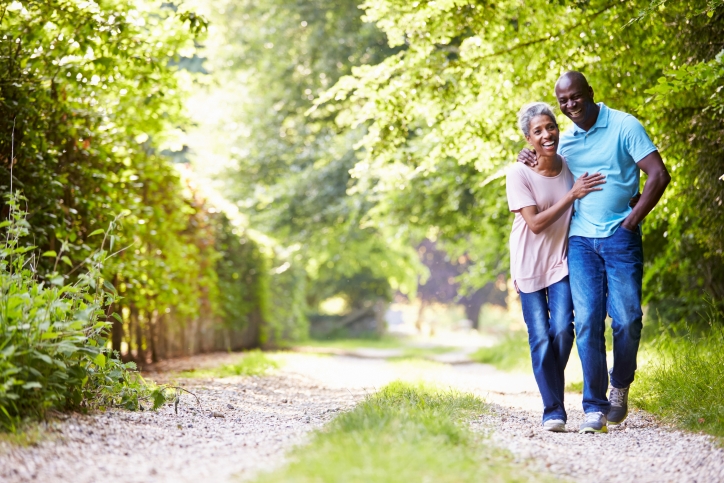
Enjoy Daily Walks
By taking one 30-minute walk a day, you’ll meet the Centers for Disease Control’s minimum recommendation for at least 150 minutes of moderate-intensity aerobic activity per week.
In addition to providing time to clear your mind, walking daily can help ease joint pain and boost immunity, according to Harvard Health.
Daily walks could even potentially add years to your life. One study found that adults who walked at least 7,000 steps a day experienced a 50% to 70% lower risk of all-cause mortality compared to adults who walked fewer than 7,000 steps per day.
You don’t have to walk alone, either (unless you want to). Ask a neighbor to join you on daily walks, or join a walking group that meets one or two times a week to build a social aspect into your routine.
Don’t have the most walkable neighborhood? Don’t be afraid to hop in your car and head the nearest park, or simply walk a few loops around your home or yard a handful of times a day.
4
Get a Good Night’s Sleep
Getting enough sleep each night is essential to maintaining good physical and mental health. An adequate amount of sleep can actually help ward off heart disease, according to the Office of Disease Prevention and Health Promotion.
People in their 50s and 60s who don’t get at least six hours of sleep each night may also be more likely to develop dementia as they age.
If you struggle to fall asleep or sleep through the night, you can take steps to stave off insomnia:
- Try avoiding caffeine in the evening
- Turn off your phone, laptop and other blue-light-emitting devices at least one hour before bed
- Learn to let thoughts go by focusing on taking 10 deep breaths with long exhales. This signals to your body and mind that it’s time to relax and restore with a good night’s sleep instead of letting your mind race.
- Consider downloading a sleep, meditation or relaxation app to your phone for guided assistance. (Your new nighttime gratitude practice can also help here!)
- Invest in a white noise or nature sounds sleep machine, which may also help you fall asleep faster. Often, you can get an alarm clock with these functionalities that also provide gentle alarms and sunrise lights to help you wake up gently.
5
Get Movin’
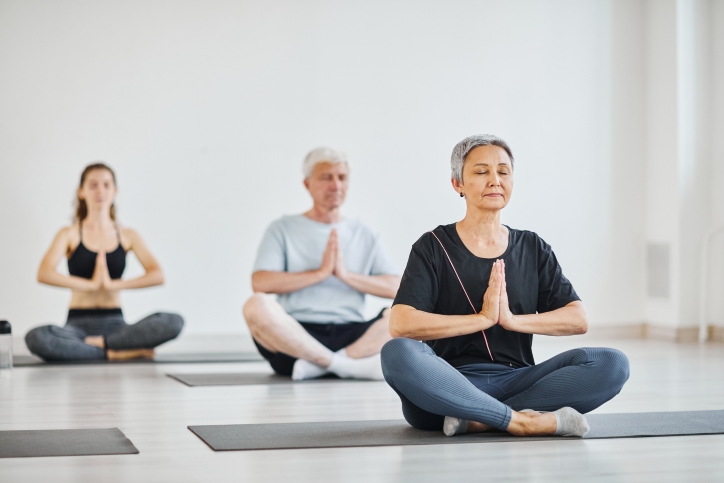
Going to the gym at least a few times a week does more than help with your physical fitness. There are social benefits, too—especially if you participate in group exercise classes such as yoga or aquatics. But, getting a new membership isn’t the only way to keep your body active.
Fitness classes provide an opportunity to meet new people and make new friends. Just being around people on a regular basis can boost your mental health, especially if you’re retired and lack a structured social network. Socializing regularly can also decrease feelings of loneliness and help keep your mind sharp as you age, according to the Mayo Clinic.
Workout ideas can range from cardio workouts, like a brisk walk or swim, to strength training using your body weight or resistance bands to build muscle and keep bones strong as you age.
If joining a new organization feels to daunting, start with incorporating more movement into your daily life at home. Dance while waiting for pasta to boil. Lean against a wall to do some assisted pushups or stretching while watching television.
By participating in this regular self-care regimen, you’re taking good care of both your body and mind.
6
Perform Random Acts of Kindness
Performing a daily random act of kindness doesn’t just benefit the recipient. When you’re kind to others, your actions can also impact your own body and mind.
Being kind to others can:
- Increase self-esteem
- Boost serotonin, dopamine and feel-good endorphins to improve mood
- Decrease levels of the stress hormone cortisol
- Lower blood pressure
The best part about this self-care habit is that it’s easy: Hold the door for someone. Smile at people on the street, in the coffee shop or at the grocery store. Compliment a customer service employee for their service.
The kinder you are to others, the better you’ll feel about yourself. Plus, the recipients of your kindness may be inspired to pay it forward, creating a ripple effect of kind acts.
And, maybe the most important, don’t forget to also be kind to yourself.
Don’t know where to start? Take our 30-Day random acts of kindness challenge!
Join the New Year’s Self-Care Challenge
Take your pick of self-care habits from this list, start applying them to your life and see if you start to notice positive effects.


Very nice article. I needed to hear or see in print all your helpful directions for a healthier life style. Also enjoyed seeing your suggestion of “random acts of kindness”!
I like to support Girl Scouts by buying cookies that I can give away to people who are helpful or kind to me.
The article was very helpful. It offers you the opportunity to try something new such as a new gym membership or to starting a new hobby of walking, meditation, or learning something new. It is food for thought. It is a good time to start the new year in a positive way.
Great information and positive motivation.
Definitely something to try and very helpful tips. Thank you
Very useful information
It really motivated me to excercise more. I need to sleep more, so I will definitely try to turn off my nitelite, ☺️
Great tips and tricks to get more Life out of Life!!! Thank you!
Since March 2025 I have ran 2 5k races and I run 6 days a week. My next 5k race is for the Blind Boys School in Talladega on 1/31/2026.
I liked it! Good ideas.
Made some interesting suggestions.
Very informative and helpful.
This should be on a plaque to hang on the wall. You could use it to remind us each day what we need to do.!!! Maybe make them so we can order them Use it for a fund raiser to those in need. I wrote them all down. Thanks because I am going to try to work on these every day starting now, not just in the new year.
Oh do we need these habits in today’s world. I have done these all my life except the journaling… I just say them to myself. All our family members were taught this by our parents and grandparents, so it is a generational thing. This should be abided by just like the Ten Commandments. Great guide to a healthy, peaceful, fulfilling life. Thanks for posting!
Most useful reminders! Thank you!
Agree with all and some already practice.
Thank You for printing these tips. We all know them, but need a refresher yearly to keep in check. Happy New Year 2026 Everyone! 🙂
I’ve been planning on and preparing for my “after Christmas” healthy habits daily goal. This article was perfect timing for me.
What absolutely wonderful advice. I try to do most of your suggestions.
This is an excellent article. It gives simple and easy to follow ways to improve one’s life. I hope to improve my mental health by following your advice! Thank you!
Thank-you, keep up the good work.
Good thoughts anytime of year.
Thank you.
I do already and agree with all of these things. That attitude of gratitude is key. Thanks!
Excellent advice